

AI PRD Generator for Teams That Need a Build-Ready Spec
The intent layer between business need and code.
Codalio turns rough app ideas into structured product requirements so founders, product teams, and engineers can move with less ambiguity.
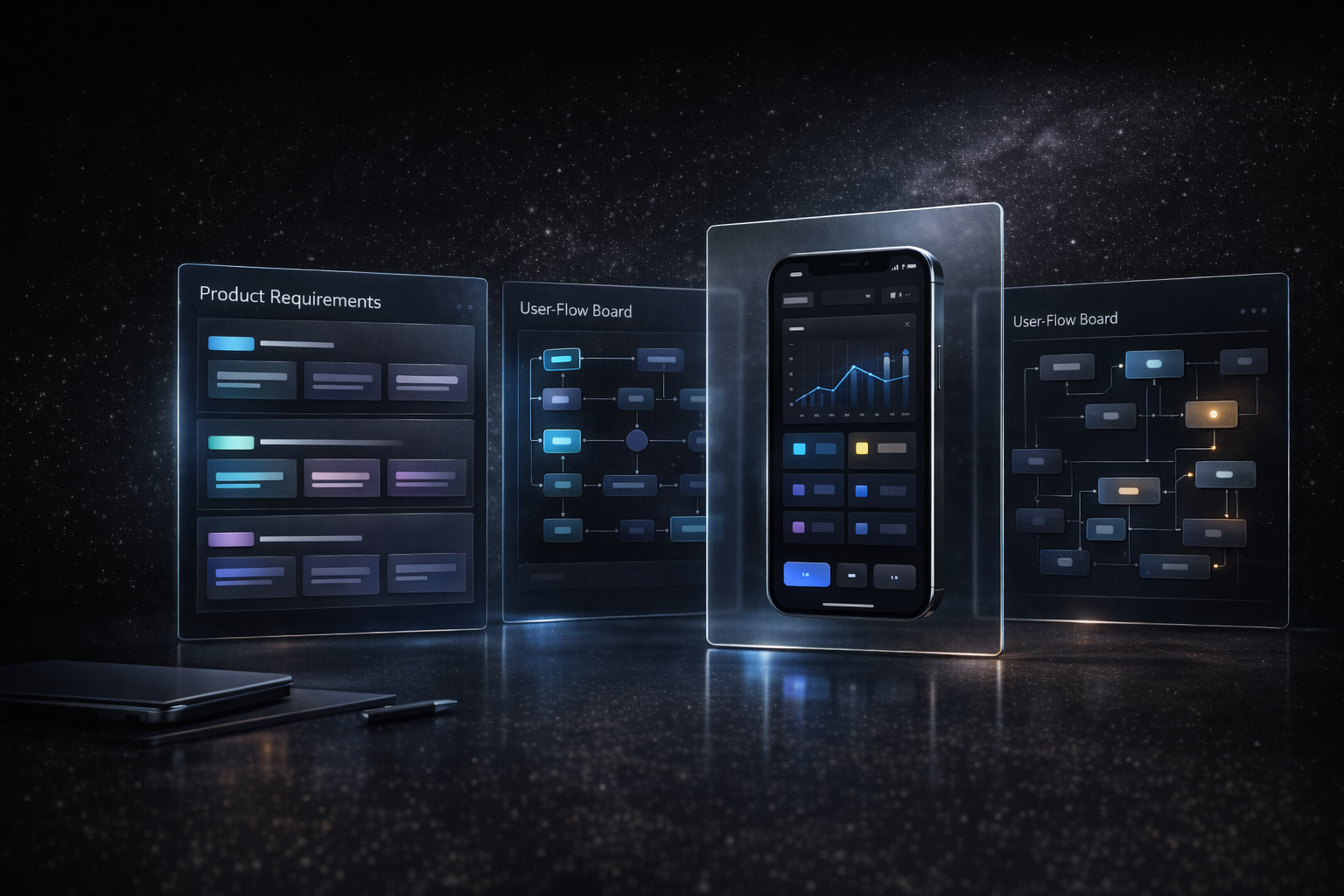
Step 1
Business Need
Workflows, constraints, outcomes, stakeholder expectations.
Step 2
AI-Generated Specification
Structured requirements, acceptance criteria, edge cases — generated and validated by AI.
Step 3
Spec-Driven Code
Code grounded in a validated spec, not a freeform prompt.
Users
Defined clearly
Flows
Captured before engineering starts
Scope
Separated into v1 and later
Why a build-ready PRD matters
These signals describe what teams are looking for when their product notes are no longer enough to make engineering decisions.
Structured working doc
Replace vague product notes with a structured working document.
Shared source of truth
Give engineering and product a shared source of truth.
Fewer interpretation gaps
Move into scope and build with fewer interpretation gaps.
What a useful PRD should clarify
The ideas below explain why this page matters commercially. They show what a buyer actually needs to understand before trusting the build path.
The user problem
A PRD is not a feature dump. It starts with the user, the outcome, and the constraint that gives the first release shape.
The first release boundary
The PRD should make the v1 scope and the out-of-scope list visible, so the build does not absorb every future idea.
The handoff to implementation
The document becomes more valuable when it feeds directly into technical planning, estimation, and delivery.
What the PRD should include
These outputs are what make the route concrete. They show founders, PMs, and engineering leads how ambiguity gets reduced before development starts.
User and context
User problem, audience, and context for the product.
Core workflow
Core workflow and high-priority features for the first release.
Scope and constraints
Out-of-scope decisions, constraints, and assumptions.
Structured foundation
A structured foundation that can feed into technical scope and delivery.
How the PRD workflow should be framed
The process matters because speed without sequencing usually pushes product decisions into development. A better workflow keeps the release boundary, assumptions, and handoff logic clear from the start.
Capture the rough idea
Start from plain language notes, founder context, or product direction.
Turn the idea into structure
Clarify users, workflow, release boundaries, and success criteria.
Use the PRD as the bridge into scope
The document should support estimation, sequencing, and the next build decision.
The PRD should feel usable by the team, not just generated
The quality bar is a document with clear structure, grounded assumptions, and obvious value for engineering handoff.
- Readable structure for product, engineering, and founders.
- Clear first-release boundaries.
- A direct path into technical scope.
PRD workspace
Founder brief translated into shipping requirements
Product brief
- ●Problem worth solving
- ●Ideal user and trigger moment
- ●Core workflow and success metric
- ●Constraints, risks, and non-goals
- ●First release boundary
Release scorecard
- MVP clarity92%
- Scope driftLow
- Launch readinessHigh
Acceptance criteria
- ✓Users can onboard without engineering help
- ✓Admin can update product content in one place
- ✓Every conversion step emits analytics events
- ✓Deployment path is documented before handoff
Frequently asked questions
These questions usually come up when a team is comparing this route against faster but thinner alternatives. They are the questions that determine whether the page feels commercially credible.
“The intent layer is the missing foundation of modern software engineering. Everything else is built on top of it.”
— Codalio Agentic Engineering workshop
Continue exploring
The next pages below let the reader go deeper into the exact part of the workflow they still need to clarify. That might be MVP scope, PRD structure, technical scope, ownership, or an alternative comparison.
What a real PRD contains
A PRD is not a long doc. It is a structured artifact that keeps the build aligned with the business goal it came from.
Structured Requirements
AI agents turn ambiguous business descriptions into hierarchical requirements with acceptance criteria, edge cases, and constraints.
Business-Objective Alignment
Every requirement traces back to a defined business outcome, so the build solves the right problem.
Continuous Validation
The spec is checked against the build as code is generated, flagging drift before it becomes technical debt.
Move from idea to a buildable product document
The PRD as the first serious planning artifact in the Codalio workflow, not just a document someone fills in later.
Generate My PRD Plan