

Technical Scope Generator for Teams That Need Execution Clarity
Codalio turns a product idea or PRD into a technical scope that makes implementation, estimation, and handoff much clearer.
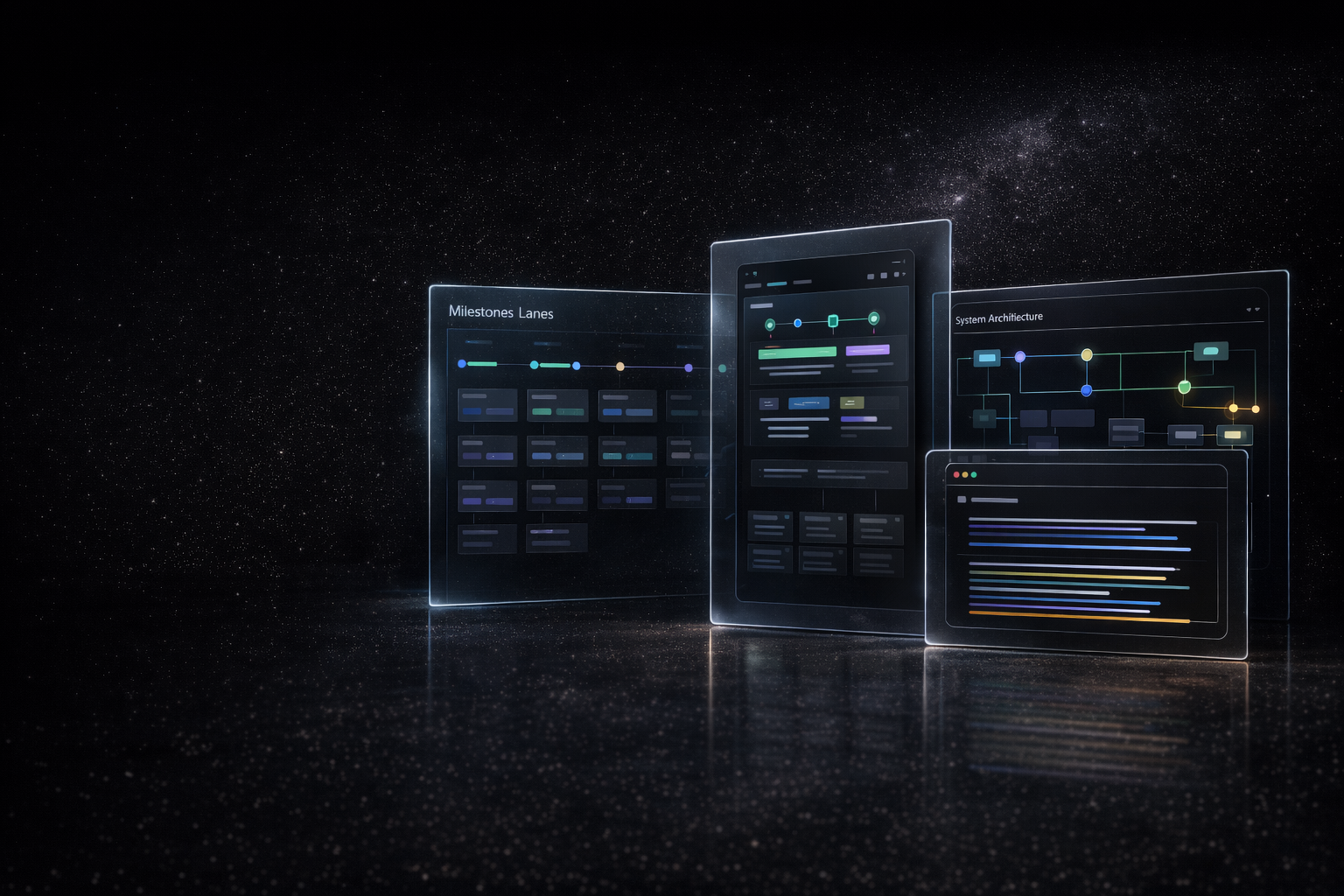
Milestones
Sequenced before development drifts
Dependencies
Named early
Risk
Reduced through clearer planning
Why scope work matters before code starts
These signals describe what teams are trying to fix when the PRD is ready but the build path still feels uncertain.
Implementation order
Clarify the implementation order before the build starts.
Structured estimation
Give estimation and handoff more structure.
PRD to technical reality
Connect PRD decisions to technical reality.
What technical scope should answer
The ideas below explain why this page matters commercially. They show what a buyer actually needs to understand before trusting the build path.
What gets built first
Scope turns features into a delivery order instead of a flat list of requests.
What depends on what
A good scope exposes system dependencies, integrations, and assumptions before they become blockers.
What the team is committing to
Scope is the bridge between product ambition and a delivery plan the team can actually commit to.
What the scope should include
These outputs are what make the route concrete. They show founders, PMs, and engineering leads how ambiguity gets reduced before development starts.
Feature breakdown
Feature breakdown and implementation order for the first release.
System considerations
System, data, or integration considerations that affect the build.
Milestones and risks
Milestones, assumptions, and technical risks that should be visible early.
Cleaner handoff
A cleaner handoff into engineering delivery or vendor execution.
How the technical scope workflow should be framed
The process matters because speed without sequencing usually pushes product decisions into development. A better workflow keeps the release boundary, assumptions, and handoff logic clear from the start.
Review the product requirements
Start from the idea, PRD, or current product direction and identify the technical shape of the work.
Map implementation structure
Break the build into systems, milestones, risks, and assumptions the team can discuss clearly.
Use the scope as a delivery guide
The result should make estimation, sequencing, and ownership easier after the page visitor becomes a customer.
A scope document that helps engineering move with less ambiguity
Technical scope is where product planning becomes a realistic build path with milestones, dependencies, and risks named early.
- Clarify stack direction and feature sequencing.
- Reduce hidden assumptions before implementation starts.
- Make the handoff into code cleaner for any team involved.
Technical scope
Architecture, data model, backlog, and dependencies
Architecture map
Data model
- usersid, email, role, company
- projectsstatus, stack, owner, budget
- requirementspriority, effort, acceptance
- eventsname, source, campaign, timestamp
Delivery backlog
- Onboarding flowP1
- Proposal generatorP1
- Admin permissionsP2
- Event QAP2
Frequently asked questions
These questions usually come up when a team is comparing this route against faster but thinner alternatives. They are the questions that determine whether the page feels commercially credible.
Continue exploring
The next pages below let the reader go deeper into the exact part of the workflow they still need to clarify. That might be MVP scope, PRD structure, technical scope, ownership, or an alternative comparison.
Make the handoff clear before development starts
Use technical scope to reduce uncertainty across product, engineering, delivery, and any future handoff.
Get Technical Scope