

How to Write a PRD for an MVP
A practical guide for founders and product teams who need a PRD that reduces ambiguity before development starts.
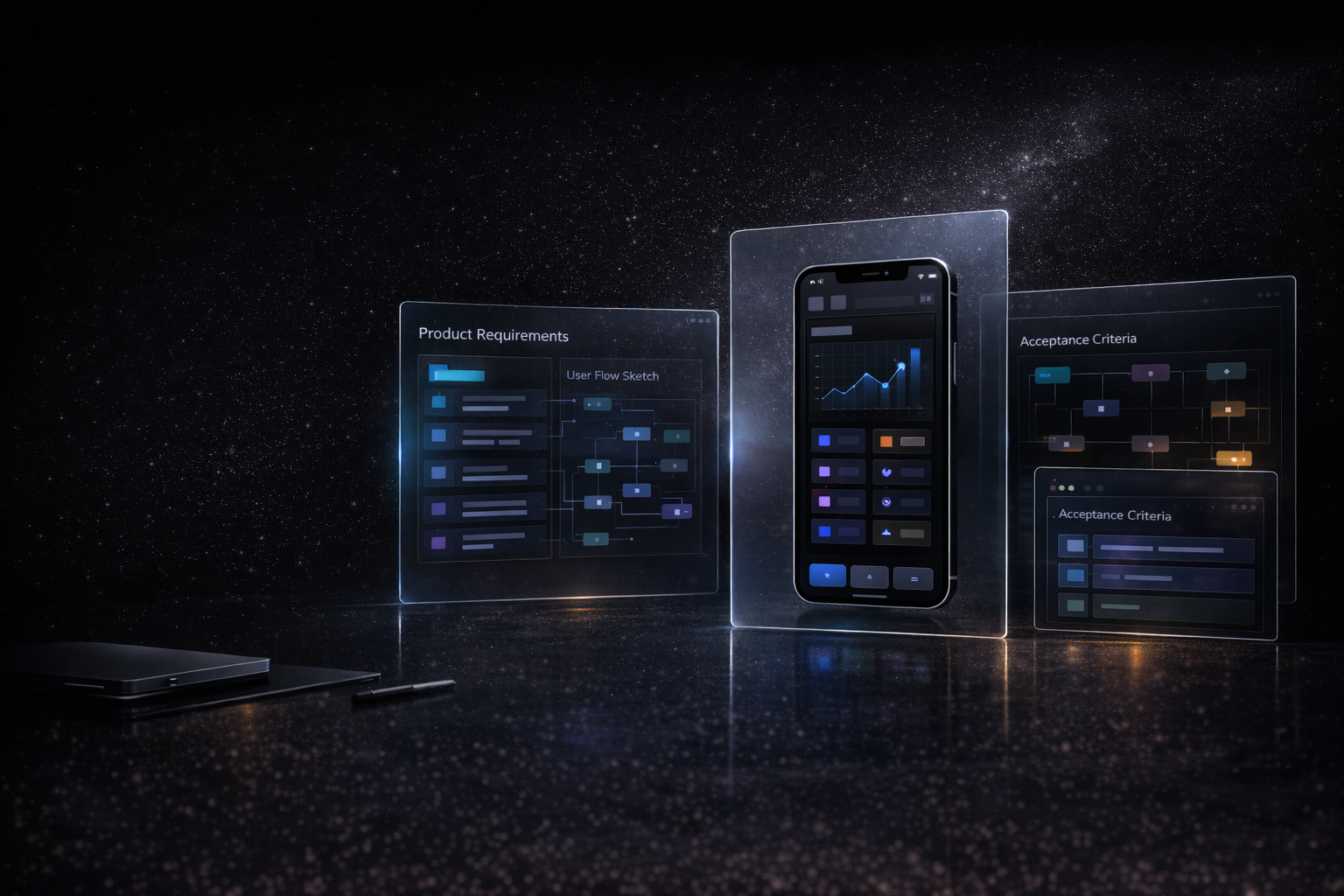
User
The person and the problem
Flow
The shortest useful path
Boundary
What v1 includes (and not)
Use this guide to make the right pre-build decisions
Learn how to write a PRD for an MVP with a practical structure that reduces ambiguity before development starts.
Use these points as the filter for everything else on the page. If the draft plan does not improve these decisions, the page is still too abstract.
Use each checkpoint to remove ambiguity before the build begins
Move through the sections below in order. Each one is meant to remove one common source of ambiguity before the work turns into a PRD, technical scope, or active build.
Start with the user problem
Before features, define who the product is for and what repeated problem it solves.
- Write the target user plainly.
- Describe the before and after state.
- Avoid writing a PRD around a generic market category.
Document the main workflow
Show what the first user should do from beginning to result so the team can align around one primary path.
- Map the entry point.
- Map the key system response.
- Map the outcome that proves value.
Draw the line around v1
A strong PRD states both what is included and what is intentionally out of scope.
- List v1 features only.
- Move future ideas into a later phase.
- Keep the first release small enough to ship.
Connect the PRD to implementation
The PRD becomes more valuable when it flows into technical scope and build sequencing instead of living as a static note.
- Clarify assumptions.
- Identify open questions.
- Use the PRD as the input to technical scope.
Teach the structure, then show the next step
The guide explains the structure behind a usable PRD and makes the next step into real planning obvious when the reader wants help.
- Answer the query immediately.
- Provide a usable structure with examples.
- Link clearly into the AI PRD Generator page.
PRD workspace
Founder brief translated into shipping requirements
Product brief
- ●Problem worth solving
- ●Ideal user and trigger moment
- ●Core workflow and success metric
- ●Constraints, risks, and non-goals
- ●First release boundary
Release scorecard
- MVP clarity92%
- Scope driftLow
- Launch readinessHigh
Acceptance criteria
- ✓Users can onboard without engineering help
- ✓Admin can update product content in one place
- ✓Every conversion step emits analytics events
- ✓Deployment path is documented before handoff
Frequently asked questions
These questions usually appear once the first draft is written and the team is deciding whether it is specific enough to act on.
Continue exploring
If the guide helped define the problem, the pages below help turn that clarity into actual deliverables and a cleaner execution path.
Turn your app idea into a real PRD and scope
Convert informational readers into planning-stage buyers who now understand the value of a stronger workflow.
Generate My PRD Plan