

Technical Scope Template for New Product Builds
Use this template to document the build sequence, feature boundaries, risks, and implementation notes before development starts.
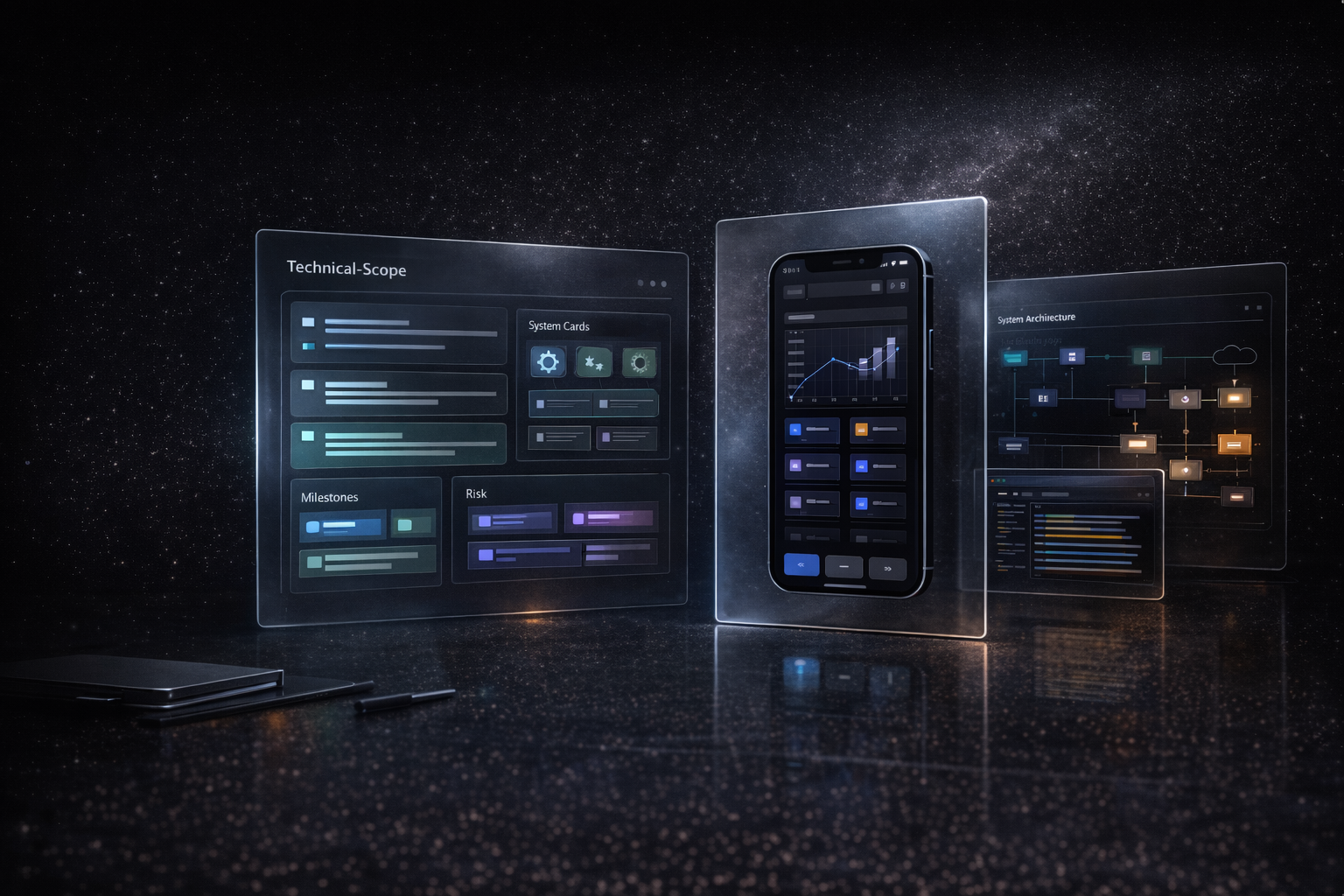
Goal
The first-release outcome
Features
What is in and out
Build
Milestones and risks named
Use this guide to make the right pre-build decisions
Use this technical scope template to plan the build sequence, document risks, and turn early product thinking into a real implementation plan.
Use these points as the filter for everything else on the page. If the draft plan does not improve these decisions, the page is still too abstract.
Use each checkpoint to remove ambiguity before the build begins
Move through the sections below in order. Each one is meant to remove one common source of ambiguity before the work turns into a PRD, technical scope, or active build.
Project summary and first-release goal
Every scope document should begin with the product outcome and what the build needs to deliver first.
- State the user problem.
- State the first release goal.
- State the success condition.
Features and workflow boundaries
List what the first release includes, which workflow matters most, and which features wait for later.
- Document the core workflow.
- List the first-release features.
- Call out what is not in scope.
Systems, data, and integrations
The scope template should help the team identify technical shape early instead of discovering it mid-build.
- List required systems.
- List integrations.
- List data or permissions assumptions.
Milestones and implementation notes
A scope template should give delivery some structure, not just document requirements.
- Break the work into milestones.
- Note dependencies and blockers.
- Record risks and open questions.
Give the reader a useful template and a clear next move
The template should leave the reader with a working structure and a clear next step into the technical scope workflow.
- Offer a clean structure.
- Keep the page practical and concrete.
- Route the reader into the technical scope product page.
Technical scope
Architecture, data model, backlog, and dependencies
Architecture map
Data model
- usersid, email, role, company
- projectsstatus, stack, owner, budget
- requirementspriority, effort, acceptance
- eventsname, source, campaign, timestamp
Delivery backlog
- Onboarding flowP1
- Proposal generatorP1
- Admin permissionsP2
- Event QAP2
Frequently asked questions
These questions usually appear once the first draft is written and the team is deciding whether it is specific enough to act on.
Continue exploring
If the guide helped define the problem, the pages below help turn that clarity into actual deliverables and a cleaner execution path.
Need a real scope, not just a template?
Move the reader from a static template into a real scope workflow that supports estimation, sequencing, and handoff.
Get Technical Scope